Where to Stay in Luang Prabang: A Local’s Guide to the Best Areas
· By the La Fontaine Residence team, based in Luang Prabang
Luang Prabang is small. Wherever you stay in or near the centre, you are rarely more than 15 minutes on foot from the main sights, so the choice is mostly one of atmosphere (heritage lanes, river views, a lively market street or a quiet residential neighbourhood) and of the kind of place you want to stay in. This guide covers the best areas to stay in Luang Prabang and the types of places to stay.
The Best Areas to Stay in Luang Prabang
These are the main places to stay in Luang Prabang, from the heritage centre outwards. The numbers match the map.

The Old Town Peninsula
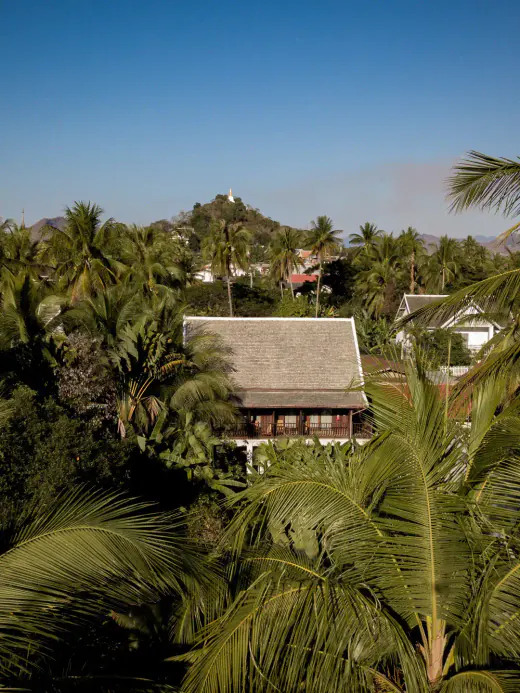
The heritage centre is the narrow tongue of land between the Mekong and the Nam Khan, listed by UNESCO as a World Heritage Site in 1995. It is where most visitors picture themselves: monasteries in gilded wood, two-storey shophouses with shutters, and quiet lanes that run from one river to the other. Wat Xieng Thong sits near the tip, where the two rivers meet.
- Pros
- Almost every sight is walkable; the morning alms giving passes along its main streets; the atmosphere is unique, especially early in the morning.
- Cons
- Prices are highest here; rooms in older buildings can be small; streets near the main road are busy during the day and the evening market.
- Best for
- First-time visitors, short stays, travellers who want to walk everywhere.
Along the Mekong Riverfront
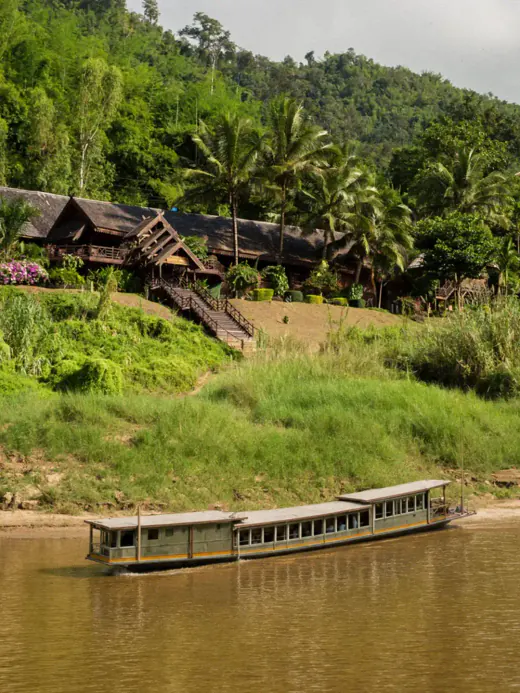
The road along the Mekong side of the peninsula is lined with cafés, restaurants and boat landings. This is where you watch the sun set over the hills on the far bank, and where boats leave for the Pak Ou caves and other river trips.
- Pros
- River views and sunsets; easy access to boat trips; a short walk to the centre.
- Cons
- Riverfront rooms cost more; the road carries more traffic than the inner lanes; some views are partly blocked by trees and riverside restaurants.
- Best for
- Couples, photographers, anyone for whom a view matters.
Along the Nam Khan River
The smaller Nam Khan curls around the eastern side of the peninsula. Its bank is greener and noticeably calmer than the Mekong side, with cafés overlooking the water and, in the dry season, seasonal bamboo bridges to the opposite bank.
- Pros
- Quiet, leafy and close to the heritage centre; a relaxed café scene.
- Cons
- Fewer restaurants after dark; some properties are down steps from the road; the far bank is a different, more local world with fewer services.
- Best for
- Couples and travellers who want calm without leaving the centre.
Around the Night Market & Sisavangvong Road
Sisavangvong Road is the main street of the old town. In the evening, part of it closes to traffic for the Night Market, where stalls sell textiles, paper lanterns and handicrafts from around 5 pm to 10 pm. The Royal Palace and the stairs up Mount Phousi are right here too.
- Pros
- The most central location of all; restaurants, tour agencies and services on the doorstep.
- Cons
- The busiest and liveliest area, with more noise in the evening; rooms facing the main road can be noisy.
- Best for
- Short stays, travellers who like being in the middle of things.
Just Outside the Centre
South-west of Mount Phousi, the streets around Ban Wat That, Ban Mano and Ban That Luang are where many residents of Luang Prabang live. You are still 5 to 15 minutes on foot from the Night Market and the Mekong, but the lanes are calmer, with local shops, schools and neighbourhood temples.
- Pros
- Quieter nights; more space for the price, including apartments and family rooms; a more everyday, local feel.
- Cons
- A few extra minutes on foot to the heritage sights; fewer cafés on every corner.
- Best for
- Families, groups, longer stays, light sleepers.
Outside Town
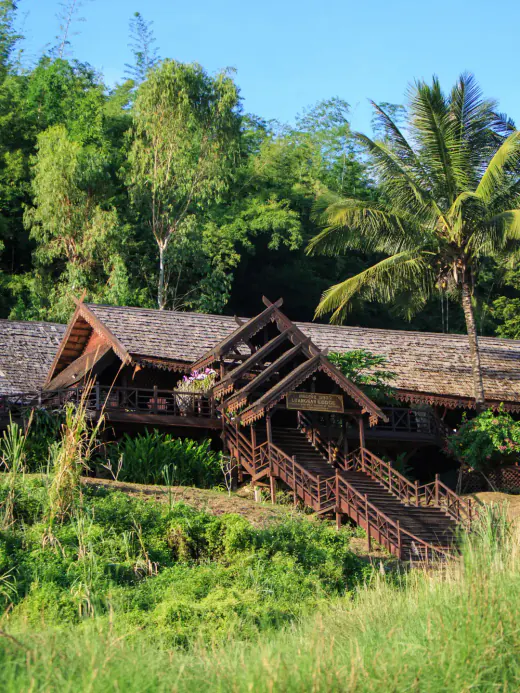
On the hills and in the countryside around Luang Prabang you find resorts with large gardens, pools and rice-field views. They can be beautiful, but most are a drive from the old town, so you depend on the hotel shuttle or a tuk-tuk to go anywhere.
- Pros
- Space, nature and calm; larger pools and gardens.
- Cons
- You need transport for every outing; evenings in town mean arranging a ride back.
- Best for
- Resort stays, honeymooners, travellers with a car or driver.
Areas at a Glance
| Area | Atmosphere | Walkability | Noise | Best for |
|---|---|---|---|---|
| Old town peninsula | Heritage, temples, shophouses | Excellent | Low to medium | First visit |
| Mekong riverfront | Sunsets, restaurants, boats | Excellent | Medium | Couples, views |
| Nam Khan riverside | Green, calm, cafés | Very good | Low | Quiet seekers |
| Night Market & Sisavangvong | Lively, central | Excellent | Medium to high | Short stays |
| Just outside the centre | Local, residential | Good (5–15 min) | Low | Families, long stays |
| Outside town | Countryside, resorts | Transport needed | Very low | Resort holidays |
Types of Places to Stay
Luang Prabang has every kind of accommodation, mostly small in scale — there are very few large hotels in the heritage area.
Boutique hotels
A Luang Prabang boutique hotel is often a restored colonial villa or a traditional Lao house, with a small number of rooms, a garden and sometimes a pool. You get character, a restaurant and staff on hand at all hours. Rooms can be compact, and the best-located ones book up early in high season.
Typical travellerCouples and travellers who want character and full hotel service.
Guesthouses
A Luang Prabang guesthouse is usually family-run, with simple, clean rooms and sometimes breakfast. Many sit right in the heritage centre. Expect fewer facilities and thinner walls, but friendly hosts and the lowest prices in the best locations.
Typical travellerBudget travellers, backpackers, short stays.
Serviced apartments & holiday rentals
Apartments and holiday rentals give you separate bedrooms, a living area and a kitchen, which makes a real difference for families, friends travelling together and anyone staying more than a few nights. Serviced apartments add daily housekeeping and often breakfast; private rentals usually do not, and check-in can be less flexible.
Typical travellerFamilies, groups, long stays, remote workers.
Resorts
Resorts offer large grounds, pools, spas and restaurants, mostly on the edge of town or in the countryside. They are a holiday in themselves, but you will need a shuttle or tuk-tuk to reach the old town and the Night Market.
Typical travellerHoneymooners and travellers who want to stay put and relax.
Which Area Is Best for You?
The best place to stay in Luang Prabang depends on who you are travelling with and how long you are staying.
- Your first visit
- Stay on the peninsula or just next to it, so you can walk to the temples at dawn and back from the Night Market at night.
- Couples
- Choose the Mekong for sunsets or the Nam Khan for calm. A boutique hotel or a studio apartment both work well.
- Families
- Look just outside the busiest streets, where you get separate bedrooms and quieter nights for the same budget. A kitchen helps with early dinners and picky eaters.
- Long stays & remote work
- An apartment with reliable Wi-Fi, a kitchen and housekeeping is easier to live in than a hotel room. Ask about weekly or monthly rates.
- On a budget
- Guesthouses on the side streets of the old town and just south of it give the best value for the location.
- You want quiet
- Avoid rooms facing Sisavangvong Road. The Nam Khan side, the residential streets south-west of Mount Phousi, or a countryside resort are all calmer.
Practical Tips Before You Book
Choose your season
The cool, dry months from November to February are high season, with the most pleasant weather and the highest demand. March to May is hot and can be hazy from agricultural burning. The rainy season, roughly June to October, is green and quieter, with heavy but often short showers.
Book ahead for festivals
Lao New Year (Pi Mai) in mid-April is the busiest and wettest week of the year — expect water fights in the streets and full hotels. The boat racing and lantern festivals at the end of Buddhist Lent, usually in October, are also busy.
Walking at night
The town is calm and generally safe after dark, but side streets are dimly lit and pavements uneven, so a phone torch helps. Most bars and restaurants close relatively early.
Respect the alms giving
The morning alms giving (Tak Bat) takes place at dawn, when monks walk in line to receive sticky rice. Watch quietly from the other side of the street, don’t use flash, don’t block the procession, dress with shoulders and knees covered, and only take part if it means something to you.
Getting around
Within the old town, walking is the easiest way to get about, and a bicycle extends your range to the quieter neighbourhoods and the far side of the Nam Khan. For longer trips, tuk-tuks wait near the Night Market and the main temples: agree the fare before you set off. If you stay outside the centre, check whether your hotel runs a shuttle and until what time.
Getting in
Luang Prabang International Airport is a short drive north-east of the old town. The railway station on the Laos–China line is further out, roughly 20–30 minutes by road, so check how you will get to your accommodation before you arrive.
Where We Fit In
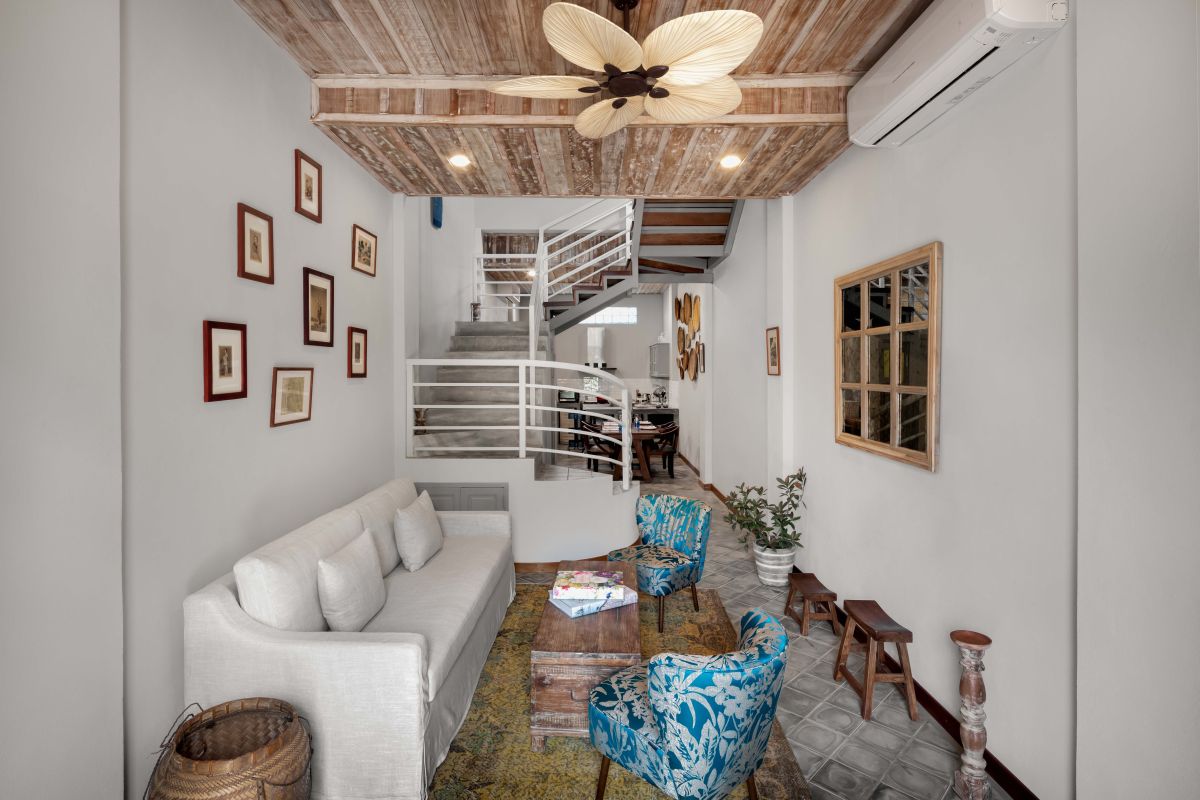
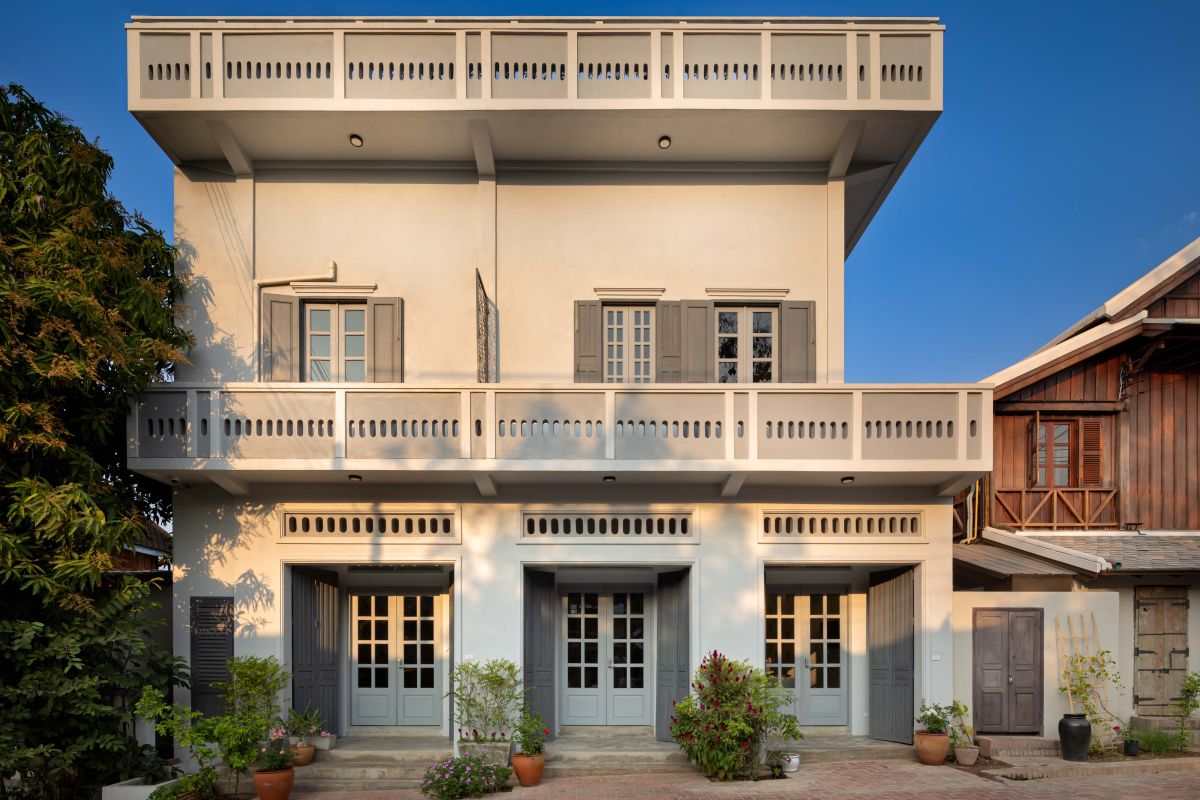
La Fontaine Residence is our own place, so take this paragraph with that in mind. We have two serviced apartments just outside the busiest streets, on Ban Wat That: 3 minutes on foot from the Mekong and 5 minutes from the Night Market — area 5 on the map, right at the edge of the old town.
The two-bedroom duplex apartment sleeps up to 6, and the studio apartment near the Night Market is for two. Both include breakfast and daily housekeeping. If you would rather stay in a hotel, our sister hotel Maison Dalabua, about 300 m away, has rooms around a lotus pond.
Questions We Are Often Asked
What is the best area to stay in Luang Prabang?
For a first visit, the old town peninsula and the streets just around it are the best base, because the temples, the Night Market, both riverbanks and the morning alms giving are all within walking distance. Travellers who want more quiet or more space can stay a short walk outside the centre.
Is it better to stay in the old town or by the river?
You don’t really have to choose: the old town is a narrow peninsula, so most places in it are only a few minutes from the Mekong or the Nam Khan. Pick a riverfront room if a sunset view matters to you; pick a side street if you want quieter nights.
Is Luang Prabang walkable?
Yes. The heritage centre is compact and flat apart from Mount Phousi, and you can cross it on foot in about 20 minutes. Bicycles and tuk-tuks cover anything further, such as the bus stations, the airport or the waterfalls.
How many nights do you need in Luang Prabang?
Three nights is a comfortable minimum. That gives you a day for the temples and the Royal Palace, a day for the Kuang Si waterfalls and time for the morning alms giving and the Night Market; many visitors stay a week or longer.
Are apartments a good alternative to hotels in Luang Prabang?
Yes, especially for families, groups and longer stays. An apartment gives you more space, a kitchen and separate bedrooms, and serviced apartments add hotel-style housekeeping and breakfast; a hotel suits travellers who want a restaurant, a pool and staff on site.